
Can Oak Trees Provide a Natural Fire Break?
Yes!
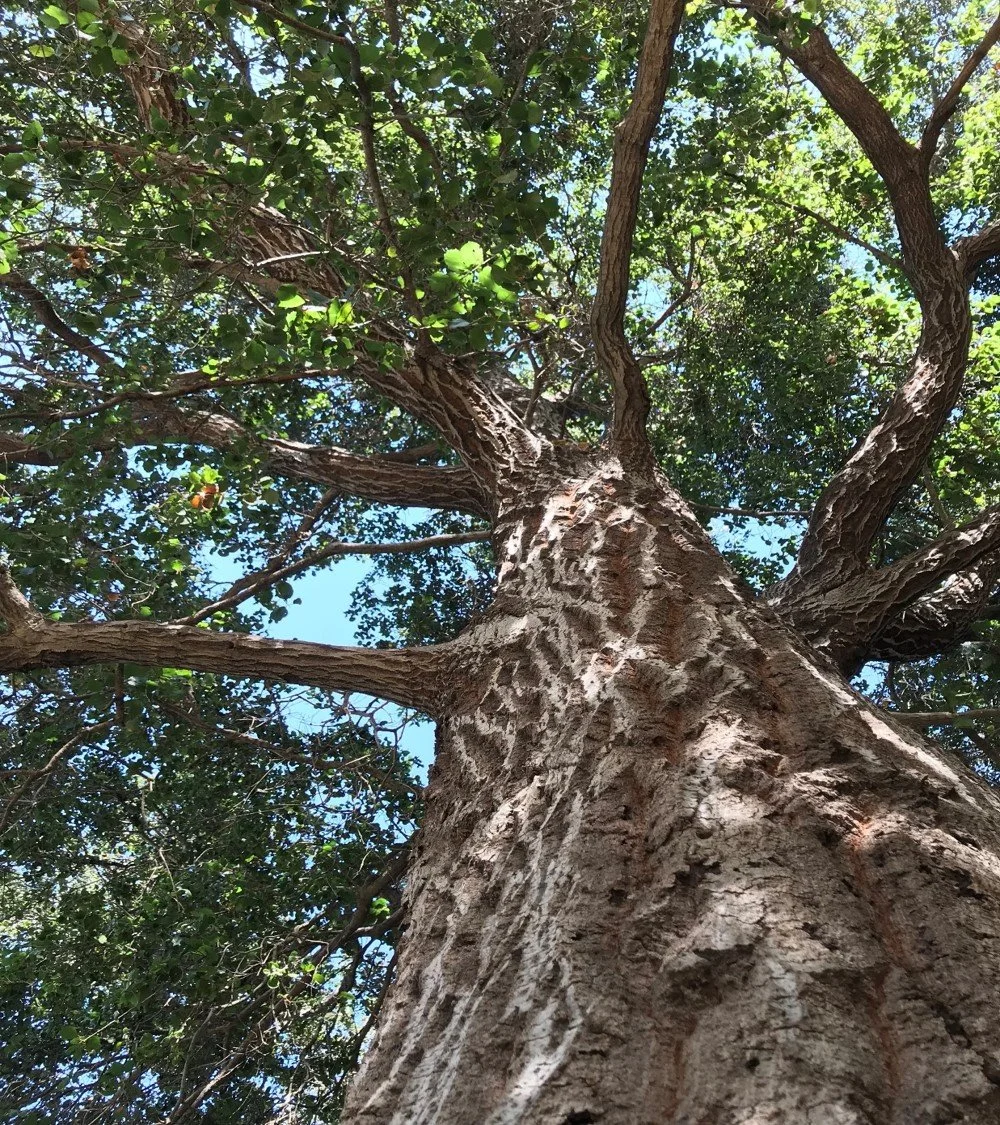
Oak trees and oak woodlands: a shared, resilient plant community that supports fire resilience.
Oak trees and oak woodlands are a defining part of Southern California’s natural landscape — including both Altadena and the Palisades. Long before homes were built, oak woodlands shaped how water, wind, soil, and fire moved across the land.
Oaks and oak woodland patches still exist in our yards and around our homes, and actually have more in common with large forests than they do with a street tree or manicured park. Researchers at the USDA Forest Service refer to these areas as “forests in the city”.
Today, research is helping us better understand something many people have noticed intuitively for decades: healthy oak woodlands tend to dampen fire spread and intensity, especially compared to cleared or heavily disturbed landscapes.
Why oaks matter after wildfire
After fire, it can feel safest to remove vegetation entirely. While bare ground may seem protective in the short term, it comes with real tradeoffs — including erosion, slope instability, and the rapid spread of invasive plants that more flammable than native species.
Oak trees offer an alternative approach: a shaded, moderately moist landscape that can slow fire rather than intensify it.
Researchers studying native plant systems have identified several characteristics of oaks that are especially relevant in post-fire landscapes:
How oak woodlands influence fire behavior
Year-round moisture
Many oak species, including Coast Live Oak, retain moisture throughout the year. While annual grasses and ornamental plants dry out in summer and fall, oaks remain comparatively hydrated, making them less likely to ignite.
Shade that suppresses flashy fuels
Oak canopies create deep shade that discourages invasive annual grasses — some of the most fire-prone plants in Southern California. Their leaf litter also breaks down into organic material that holds moisture rather than becoming loose, fast-burning fuel.
Wind buffering
Groups of oak trees reduce wind speed at ground level. Lower wind speeds mean slower fire spread and less intensity — an important factor during wind-driven fire events.
Soil moisture and fog drip
In coastal and foothill environments, oaks can increase localized soil moisture through shade and fog drip, subtly changing ground conditions in ways that make fire less likely to race through the landscape.
Post-fire recovery
Oaks are remarkably resilient. Many species can resprout vigorously after fire due to thick bark that protects vital growth tissue. This allows oak woodlands to recover rather than collapse after disturbance.
A different way to think about “fuel breaks” (aka fire breaks)
You may be familiar with wide, cleared strips of land on ridgelines or slopes, often referred to as fuel breaks. While these can provide short-term access for firefighting, they also:
Disturb soils that hold slopes in place
Eliminate habitat
Encourage invasive plants that often burn more easily
Researchers and land managers are now studying shaded fuel breaks — areas planted with native trees like oaks — as a long-term alternative. These living buffers aim to slow fire by changing micro-conditions (shade, humidity, wind), rather than relying on permanent clearing.
Importantly, shaded fuel breaks are not fireproof barriers. Instead, they are part of a broader strategy that values stability, moisture, and structure over exposure and disturbance.
What this means for homeowners
For homeowners rebuilding after fire, oak trees and oak-associated plant communities offer several long-term benefits:
They stabilize slopes and soils
They reduce dependence on constant irrigation
They suppress invasive, fast-burning plants
They support wildlife returning after fire
They align with natural recovery patterns already occurring on the land
Oak trees are slow to establish and require thoughtful placement — especially near structures — but they are a generational investment. Once established, they provide services that would otherwise require ongoing mechanical clearing and maintenance.
A note of realism (and respect)
Oak trees do not guarantee protection from wildfire. No plant, tree, or landscape can.
But research increasingly shows that intact, shaded, moisture-holding plant systems behave very differently than stripped or fragmented ones.
In a post-fire environment, choosing to work with oak woodlands is not about resisting safety — it’s about choosing an effective form of resilience that lasts.