
This Is The Truth About Urban Firestorms
You’ve probably been told some version of this:
“These fires are getting worse because of climate change.”
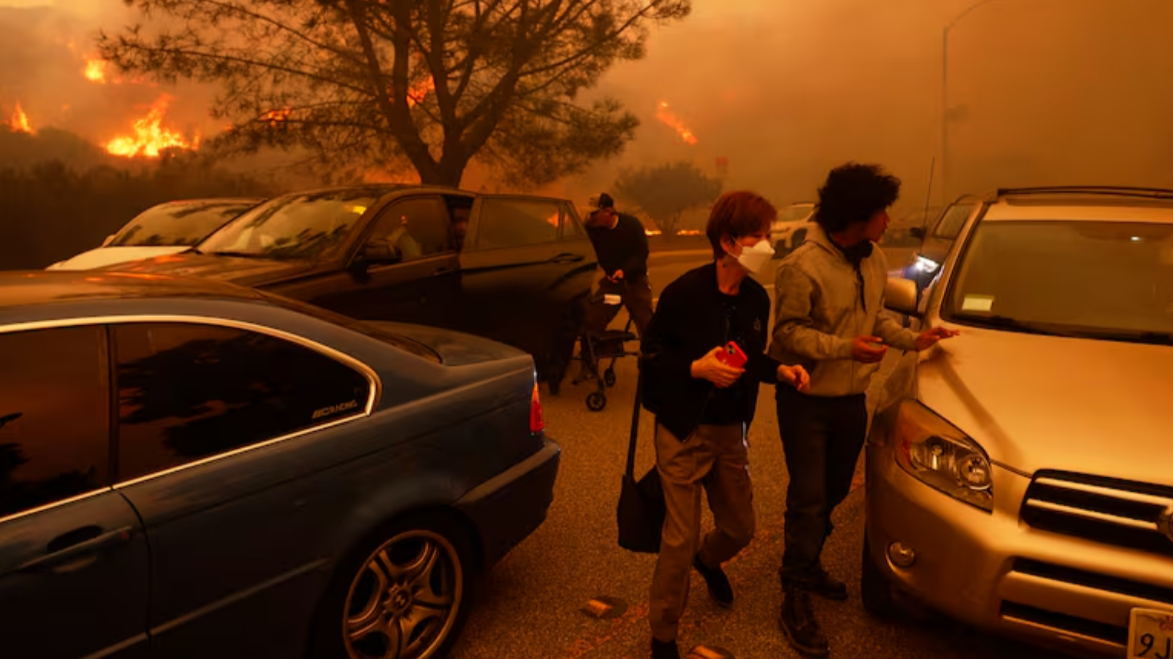
Climate change is real. But that explanation does not tell you why neighborhoods in Los Angeles burned the way they did. And worse—it hides the decisions that made those losses far more likely.
Here is the part too many officials, influencers, and media avoid saying out loud:
In urban and hillside neighborhoods, people light the match. Structures are the fuel.
Urban wildfires do not behave like forest fires. Once a fire enters a neighborhood, houses burn houses. What determines whether a fire becomes a neighborhood-level disaster is not temperature graphs or climate models. It is:
How many people are there (ignition sources)
How many structures are there (fuel)
How close together those structures are from each other (fire spread)
More people mean more ignitions: power lines, cars, construction, equipment, accidents. More buildings mean more fuel. Less space between buildings means faster spread, and cascading failure.
This is basic fire physics.
Adding infill housing in a fire prone area is not neutral. It is not “climate adaptation.” It is like adding logs to a fire.
Climate does not drive cars into canyons. Climate does not approve dense housing with one way in and one way out. Climate does not reduce setbacks or space between houses.
Once multiple buildings ignite, the heat and ember production from burning structures overwhelms background climate conditions. A burning house does not need climate change to burn intensely.
Urban fire intensity is driven by structure density and spacing, not temperature alone. When people frame urban wildfire primarily as a climate problem, they shift attention away from the real question residents should be asking:
Why were so many structures allowed to be built so close together in places that burn?
The Hard Truth About “Home Hardening”
Home hardening is often presented as the solution—“If everyone just hardens their homes, we’ll be safe or the homes won’t burn”
That promise is not honest.
Yes, sensible hardening can reduce individual risk at the margins. No, it is not a silver bullet—and it never has been.
Here’s what rarely gets said:
Hardening does not stop structure-to-structure fire once neighborhoods ignite.
Most hardening claims are based on experiments, simulations, or selective case studies, not real-world neighborhood-scale outcomes.
Older neighborhoods cannot realistically harden to modern standards.
Architecture, age, and practicality range from block to block.
The idea that safety depends on everyone hardening is not realistic—and it quietly turns into homeowner blame when homes are lost.
When officials imply that losses happened because homeowners “didn’t harden enough,” they are shifting responsibility away from land-use decisions and onto residents who were never given safe choices in the first place.
That’s not resilience. That’s victim-shaming dressed up as policy.
Why This Framing Is Dangerous
Overselling home hardening and blaming climate has been used to justify something far more consequential:
Shrinking California’s long-standing 30-foot setback standard
Approving more density in the most dangerous locations
Treating spacing as optional instead of foundational
But spacing is the firebreak in urban environments. If hardening truly replaced spacing, fire departments would not insist on separation distances in hazardous settings. They do—because physics does not negotiate.
What People in Fire Zones Are Right to Demand
If you live—or lived—in a fire zone, you are not unreasonable to ask:
Why are we adding more housing where evacuation already fails?
Why are cumulative risks ignored project by project?
Why are residents told to “harden” while density keeps increasing?
Why is climate blamed instead of siting, spacing, and agency failures?
This reality can’t be said clearly or often enough.
Urban wildfire is not primarily a climate story. It is a human ignition and land-use story.
More people = more ignitions.
More structures = more fuel.
Less spacing = bigger, more intense fires.
People who lost homes in Palisades and Altadena deserve honesty—not comforting myths, not blame, and not policies that repeat the same mistakes.
If we don’t name the real causes, we will keep rebuilding the conditions for the next firestorm—and calling it resilience.
“What climate influences is how a fire behaves once it starts. What determines whether it starts at all—and how often—is building density, infrastructure, and human presence.”
“In the WUI and WUI-adjacent urban foothill landscapes, wildfire occurrence is increasingly constrained by ignition pressure, and the peer-reviewed literature consistently finds that human-caused ignitions dominate fire starts and that building and population growth increases ignitions and exposure—independent of climate trends.”
“Climate change can intensify burning conditions, but it does not substitute for a project’s incremental contribution to ignition sources and exposure created by siting and density decisions in VHFHSZ/WUI settings.”
“More people + more development in/near wildlands = more ignitions and higher fire occurrence.”
“When a city approves denser housing in Very High Fire Hazard Severity Zones, it increases ignition pressure. When it concentrates more people, cars, power lines, and construction activity into narrow canyons with limited evacuation routes, it increases the probability that a fire will start—and that people will be trapped when it does.
Calling that outcome “climate-driven” is not science. It’s misdirection.”