
ABANDONED: What the Palisades Fire Really Shows—And Why Zone 0 Won’t Save Us
The Palisades Fire: They Just Gave Up
There is a moment in the YouTube documentary Abandoned—tucked between the shaky phone videos of burning rooftops and the interviews with stunned homeowners—where the entire story comes into focus. A resident leans over a backyard pool, filling a bucket while his friend drags burning debris off a fence. Not a single firefighter is in sight.
“Where are they?” he asks the camera. “There was absolutely nobody there,” another neighbor repeats. “Not a single truck.”
This was not a vegetation fire - a fire-industry term that flattens everything — green gardens, shade trees, native plant communities, milkweed, succulents, roses, oak trees — into an undifferentiated category of “fuel.”. This was not “fuel”. This was an urban conflagration: houses igniting houses, fences igniting cars, garages exploding, embers ricocheting through a dense suburban grid of combustible structures.
And yet the documentary—like nearly every public official speaking over the ashes—keeps using the same word: “Fuel.”
As if the chaparral caused the Chase Bank rooftop to ignite. As if shrubs caused hydrants to run dry. As if a missing set of pruning shears caused three water tanks to empty in less than 24 hours while a 115 million gallon reservoir sat empty next door.
The video’s central flaw is not malicious. But it feeds a dangerous political narrative: the idea that plants, not policies, burned the Palisades.
And that fiction is the beating heart of Zone 0.
The Real Story: A System That Collapsed in Real Time
Several facts in Abandoned are beyond dispute. The fire burned because structures burned. The clearest images show houses torching fences, fences torching cars, garages torching neighboring houses. This is exactly what fire scientists like Jack Cohen have warned for decades: homes are the primary fuel in urban firestorms—not vegetation.
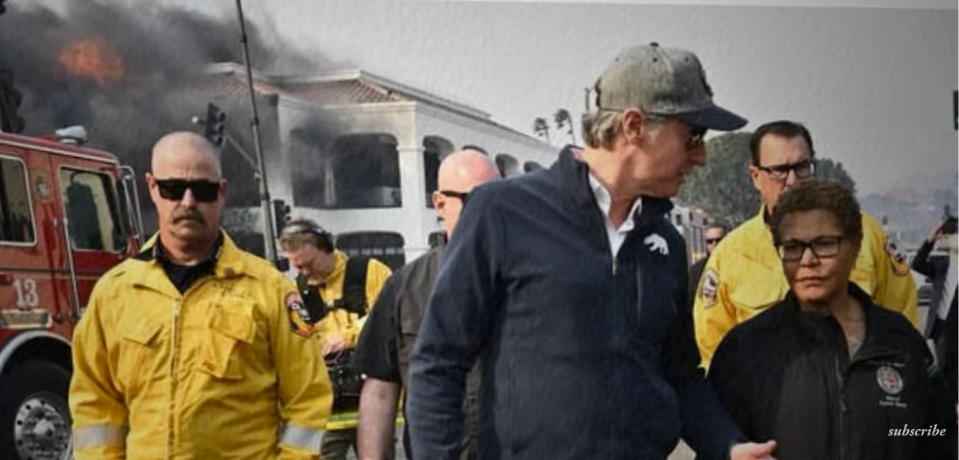
Critical failures—not shrubs—accelerated the disaster. Fire Station 23 was not at its station and arrived 22 minutes late. Three water tanks ran dry. A 115-million-gallon reservoir was drained months earlier despite explicit city policy prohibiting it. Firefighters were ordered to stand down and dozens of fire engines were parked for press conferences and breakfast burritos at the beach while entire as Palisades burned.
California’s native Chaparral did not burn the Palisades. Houses did. Even in the video’s one nod to brush clearance—a hillside that happened not to carry fire into a single home—the destruction that followed was all structural. Once houses ignited, the surrounding green yards became irrelevant. The “fuel” was lumber, attic vents, asphalt shingles, fences, decks, garages, and cars. This matches the Eaton Fire, the Marshall Fire, the Lahaina Fire, the Boulder Fire, and every major wind-driven urban fire of the last 30 years.
But Zone 0 Pretends the Opposite
Zone 0—the state’s coming 0–5 ft vegetation removal mandate—rests on a single flawed assumption: If we remove plants closest to homes, the homes won’t ignite. But the Palisades Fire tells a different story. Houses ignited from wind-driven embers entering vents, not shrubs. Houses ignited because water ran out, not because rosemary was too close to a wall. Houses ignited because no fire crews were present when small fires could have been stopped with a single hose line. Houses ignited because the built environment is combustible, and we keep adding more more buildings to fire-prone areas, despite the increased risk.
The state’s answer?
Regulate hibiscus and trees. Meanwhile, the real ignition pathways—vents, fences, decks, attic design, water infrastructure, staffing, response strategy—remain inconsistently enforced or, in some cases (like the drained reservoir), simply neglected.
Zone 0 Is Not a Fire Policy—It’s a Political Distraction
When a system fails this comprehensively, someone has to take the blame. And California’s wildfire-industrial complex has found its preferred scapegoats: homeowners and their gardens.
Zone 0:
shifts responsibility from government to individuals
converts landscaping into a compliance zone for insurance scoring
produces miles of non-vegetated “moats” that may increase ember entry by unscreened vents
eliminates urban habitat in a city where 90% of the urban forest exists on private property
pretends that structural firestorms are “brush fires,” even when footage shows the opposite
Abandoned unwittingly reinforces this narrative by using the fire industry’s favorite euphemism: “fuel.” But the only meaningful fuels in the Palisades were homes, infrastructure, and the failures of those entrusted to protect them.
What the Palisades Video Actually Teaches Us
Urban firestorms require urban solutions — screened vents, fire-resistant design, and yes, water availability. Removing plants does not stop wind-driven structural ignition. Hydrants running dry is not a homeowner problem. It is a governance failure. Staged fire engines at press conferences do not protect neighborhoods. Only active, targeted urban firefighting can.
The Palisades burned not because of what homeowners planted, but because of what government did not do.
If California Wants to Prevent Another Palisades, Zone 0 Is the Wrong Tool
California is on the brink of codifying Zone 0 statewide—one of the most intrusive private property regulations in modern state history.
It will force homeowners to remove the very canopy that makes urban life bearable, ecologically functional, and defensible against heat.
And it will do nothing—nothing—to prevent another Palisades.
Because the Palisades did not burn from plants. It burned from blown embers, structural fuels, empty water systems, and government paralysis. Los Angeles officials stood before cameras on the beach proclaiming preparedness while residents on Charmel Lane hauled pool water in buckets to save their neighbors’ homes.
That is the real story of the Palisades Fire. And it should terrify anyone who thinks Zone 0 will save them.
The video ends with a resident pleading: “No. Stop. Let’s figure out what happened here.” Exactly! Let’s figure out why the reservoir was empty, why fire engines were staged for public relations, why hydrants ran dry, why firefighters were ordered to stand down, and why, on Day 2, an American city was left to burn itself down.
Zone 0 cannot answer any of those questions. It cannot fix any of those failures. It cannot hold a hose, refill a hydrant, or repair a reservoir. But it can—and will—blame plants. And that is the worst lesson we could take from the ashes of the Palisades.